Share this article:


National Day of the United Arab Emirates
Celebrating 54 years of unity
As the UAE marks its 54th National Day on December 2nd, the nation reflects on an extraordinary journey from a
collection of fishing villages to one of the world's most dynamic destinations. But beyond the iconic Burj Khalifa
and golden beaches, lies a UAE that few European travelers truly know: a place where ancient traditions meet audacious innovation,
and where every visit unveils surprises.
Every December, the UAE bursts into colour. Streets glow, towers shimmer, families gather, and the whole nation celebrates
the moment the Emirates came together on 2 December 1971. But behind the fireworks and festivities lies a story
filled with diplomacy, bold decisions, and surprises that even long-term residents don’t always know.
The UAE beyond the brochure: little known facts
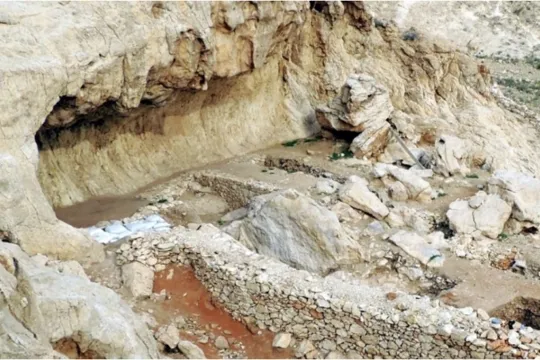
Jebel Faya Archeological Site
Nation younger than your parents, and older than the civilization.
While the UAE itself celebrated just over five decades of nationhood, the land tells a story spanning 210,000 years.
Archaeological discoveries in Jebel Faya reveal that modern humans passed through the Emirates during their migration from Africa,
making this one of humanity's oldest crossroads. The contrast is striking: a nation born in 1971 standing on ground where our ancestors first walked.
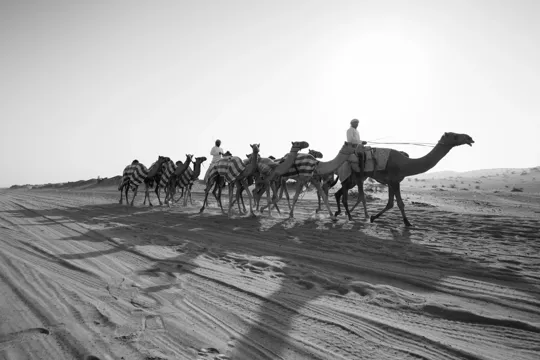
Small caravan in the desert
The UAE Was Almost a 9-State Union.
When Britain announced its withdrawal from the Gulf in 1968, regional
leaders began discussing a federation of nine states: today’s seven emirates plus Bahrain and Qatar.
Negotiations stretched over years. Eventually, Bahrain and Qatar chose independence. Still, Dubai and Abu Dhabi
had already agreed that a union must move forward, even if they had to start with just two.
Their determination became the foundation of the future UAE.
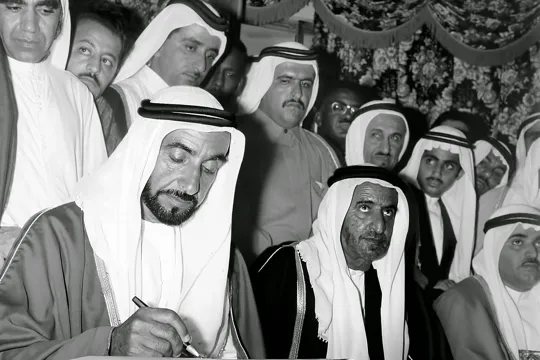
Sheikh Zayed, the first President of the UAE
“United Arab Emirates” Wasn’t the First Name Considered
During early discussions, several other names were considered, among them:
- The Federation of Arab Emirates
- The Trucial States Union
- The Arabian Gulf Federation
Each had supporters, but leaders searched for a name that reflected identity, unity, and future potential. “United Arab Emirates” captured that vision.
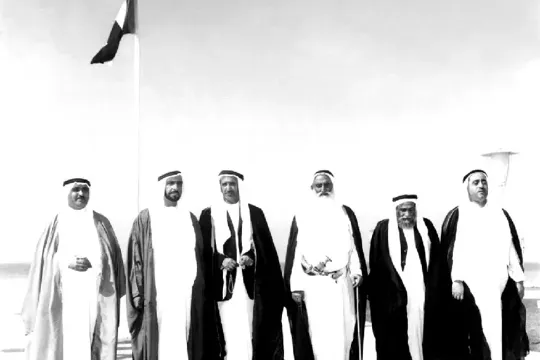
Rulers of the 6 emirates
Ras Al Khaimah joined two months later.
On 2 December 1971, there were six emirates that entered the union on that day. Ras Al Khaimah joined the federation on 10 February 1972.
The delay was linked to ongoing regional discussions and security concerns.
Once resolved, RAK joined as the seventh and final member — completing the map we know today.
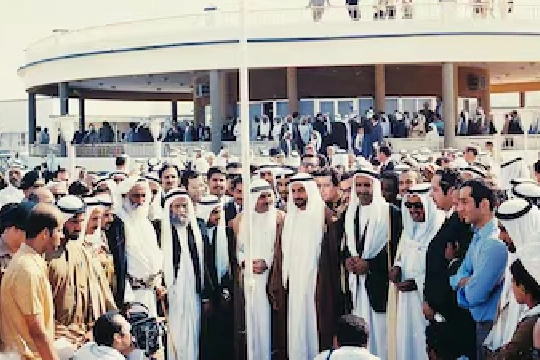
Sheikh Zayed and the other rulers on 2nd Dec 1971 at Union House
The Union Was Signed in a Modest Beach Guesthouse.
While people may imagine the union being signed in a grand palace, in reality, the historic documents were finalized
in a simple guesthouse on Dubai’s Jumeirah beach, now preserved as part of Union House at the Etihad Museum.
This low-key location reflects the practical, focused approach of the founding rulers — and remains one of UAE’s most underrated cultural sites.
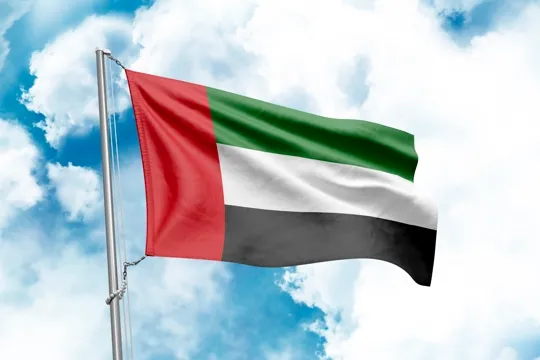
Flag of the United Arab Emirates
The UAE flag was designed by a teenager.
One of the most inspiring stories: In 1971, a young Emirati named Abdullah Mohammed Al Maainah, just 19 years old,
submitted his design to a public competition advertised in a local newspaper. His colours symbolised:
- Green - prosperity, growth, and flourish
- White - peace, honesty, and charity
- Black - strength, resilience, and determination
- Red - sacrifices of the past generations, and - as the stripe that joins the other colors - the unity of the nation.
The UAE today: symbol of achievement, unity and prosperity

Sheikh Zayed Grand Mosque, Abu Dhabi
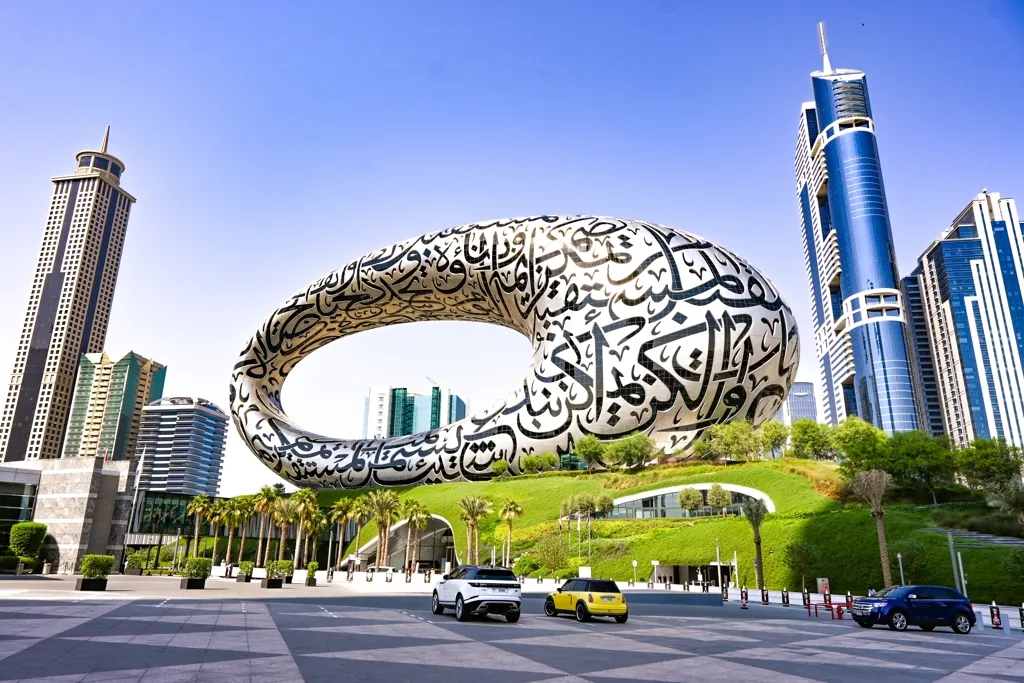
Museum of the Future, Dubai
What began as a federation with limited infrastructure has evolved into one of the most prosperous and globally connected nations on earth. In just five decades, the UAE has transformed from a desert economy dependent on pearl diving and fishing into a global hub of commerce, tourism, and innovation. Yet true prosperity here extends far beyond economic metrics. The Emirates has invested its wealth in world-class healthcare, education, and infrastructure that serves residents and visitors alike. Free zones attract entrepreneurs from every continent, while sovereign wealth funds shape global markets. More significantly, the UAE has redefined prosperity to include quality of life—creating cities where safety, cleanliness, and efficiency are givens rather than aspirations. For visitors, this translates into seamless experiences, from the moment of arrival to the final farewell.
The story of the UAE is a story of achievement that comes from bold leadership and collective ambition. When the world said a young desert nation couldn't build the tallest tower, Dubai raised the Burj Khalifa. When experts doubted a Gulf state could reach Mars, the Hope probe entered Martian orbit. When skeptics questioned whether world-class culture could flourish in the region, Abu Dhabi opened the Louvre and Dubai unveiled Opera. The UAE has consistently refused to accept limitations, proving that with vision, investment, and determination, yesterday's impossibilities become tomorrow's landmarks. This spirit of boundless ambition isn't just inspiring to witness; it infuses every experience in the Emirates with a sense that anything is possible.
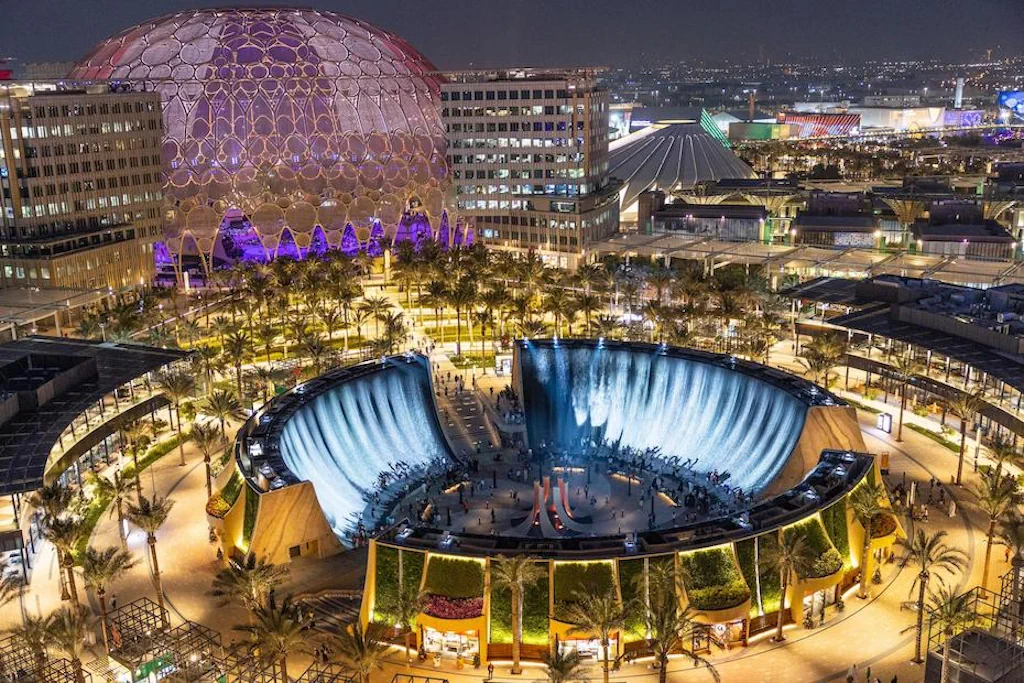
Expo 2020 site, Dubai
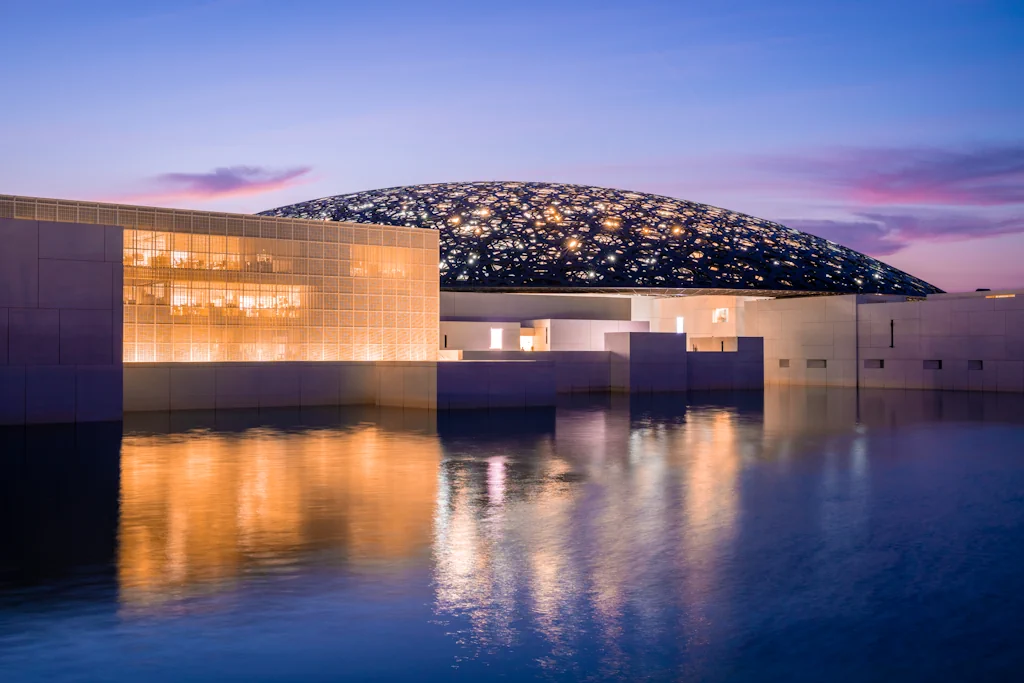
The Louvre Museum in Abu Dhabi
The UAE stands as a remarkable testament to what becomes possible when people unite under a shared vision. What Sheikh Zayed bin Sultan Al Nahyan and the founding fathers accomplished in 1971 - bringing together Abu Dhabi, Dubai, Sharjah, Ajman, Umm Al Quwain, Fujairah, and later Ras Al Khaimah, has evolved into one of the world's most cohesive multicultural societies. Today, over 200 nationalities live and work together in harmony, celebrating their own traditions while embracing a collective identity rooted in tolerance and mutual respect. This isn't merely coexistence; it's a living model of how diverse communities can thrive together, building something greater than any could achieve alone.
The winter and early spring period offers the best experience when visiting UAE. We in Perun Tours do not sell packages - we create experiences. From private desert dinners under the stars to behind-the-scenes cultural encounters most visitors never discover, every itinerary is built around you—your pace, your interests, your definition of extraordinary. No crowds, no cookie-cutter tours. Just the UAE the way it deserves to be experienced.